
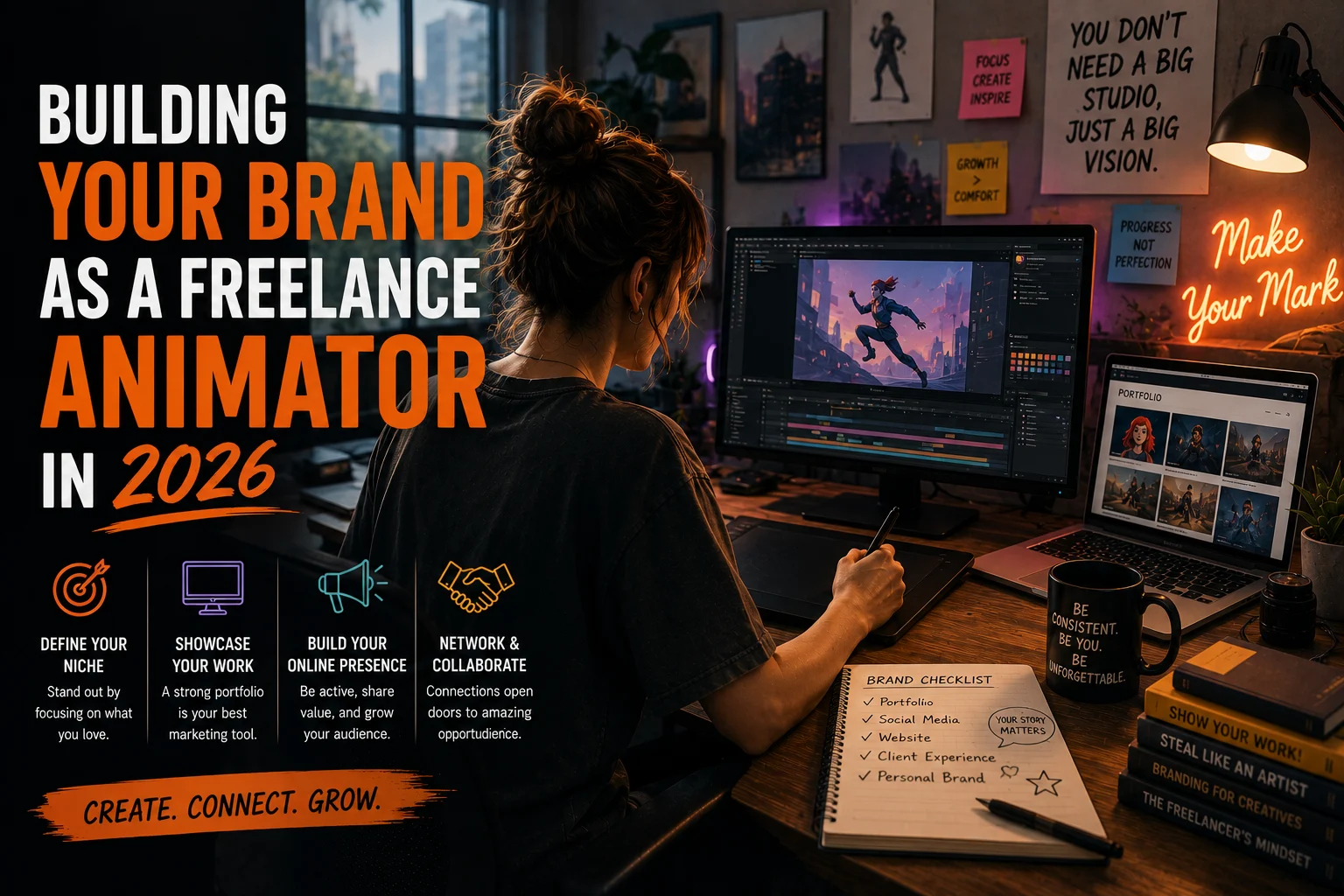
Building a personal brand as a freelance animator is one of the most valuable long-term investments you can make in your career. In a market where studios, agencies, and direct clients have more choice than ever when hiring creative talent, the animators who build a recognisable professional identity — a consistent body of work, a visible online presence, and a reputation that precedes them — consistently attract better work, better rates, and better relationships than those who rely solely on job boards and cold applications.
This guide covers how to build a personal brand as a freelance animator in 2026 — from defining your niche and building your portfolio, to growing your online presence and developing the client relationships that generate consistent referral work. If you are exploring freelance animation opportunities, browse animation jobs on PixelCareer including contract and freelance roles.
What Personal Branding Actually Means for Animators
Personal branding in the creative industry is often misunderstood as self-promotion or marketing. In practice, it is simpler than that — your personal brand is what people think of when they think of you professionally. It is the combination of your visual style, your areas of expertise, your professional reputation, and the impression you leave on every client, collaborator, and studio you work with.
You already have a personal brand whether you have actively built one or not — it is the impression your existing work and professional interactions have created. The goal of intentional personal branding is to shape that impression deliberately, so that the right clients and studios think of you for the right kinds of work.
Define Your Niche
The most common mistake animators make when thinking about their personal brand is trying to appeal to everyone. A brand that positions you as good at everything is a brand that stands out to no one. The animators who build the strongest freelance practices are typically those who have developed a clear area of expertise and positioned themselves as the go-to person for that specific type of work.
Your niche does not need to be narrow to the point of limiting — but it should be specific enough to be memorable. Consider:
- What type of animation do you genuinely do best — character performance, motion graphics, creature animation, cel animation, 3D product animation?
- What industry or client type do you most enjoy working with — games studios, advertising agencies, tech companies, broadcast networks, independent directors?
- What is the visual quality or aesthetic that most clearly runs through your best work?
The answers to these questions are the foundation of your niche. A freelance animator who is known for “clean, character-driven 2D animation for independent games studios” is far easier to recommend to a potential client than one who is known for “animation.”
Build a Portfolio That Reflects Your Brand
Your portfolio is the primary expression of your personal brand. Every piece you include communicates something about the type of work you want to attract — so curating it with your niche and target client in mind is essential.
For freelance animators building a personal brand, the portfolio should do several things simultaneously. It should show the highest quality of your technical craft. It should demonstrate your specific aesthetic sensibility and visual style. It should signal the type of clients and projects you are most suited for. And it should be presented in a way that feels consistent and intentional — not a random collection of everything you have ever made.
A portfolio reel of 60 to 90 seconds is the centrepiece. Surrounding it with individual project case studies that explain the brief, your process, and the outcome adds the depth that converts portfolio viewers into genuine enquiries. The best freelance animator portfolios tell a story about who you are and what you do — making it easy for the right clients to self-select and reach out.
Choose the Right Platforms for Your Presence
You do not need to be on every platform — you need to be consistently visible on the right ones for your target clients. The most relevant platforms for freelance animators building a personal brand in 2026 are:
Your own website: The most important platform for a serious freelance animator. A personal website gives you complete control over how your work is presented, how you describe yourself, and how potential clients can reach you. It is the only platform where you own your presence entirely, without algorithm changes or platform shutdowns affecting your visibility. Keep it simple — your reel, your best work, a clear bio, and a contact form.
Vimeo: The preferred platform for hosting and sharing animation reels professionally. High playback quality, professional associations within the industry, and the ability to password-protect work shown to specific clients make it the default choice for serious animators.
Instagram: Instagram’s short-form video format is well-suited to animation — loops, excerpts from longer pieces, behind-the-scenes process content, and work-in-progress clips all perform well. Instagram is particularly effective for reaching advertising agencies, brand clients, and creative directors who use it actively to discover talent.
LinkedIn: LinkedIn is the most direct platform for professional visibility in the business and creative industries. Sharing your work, writing about your process, and engaging thoughtfully with content from others in your industry builds professional credibility and keeps you visible to potential clients and collaborators. LinkedIn is particularly effective for B2B clients and corporate animation work.
ArtStation: Essential for animators targeting games studios and VFX productions. ArtStation is where the games and VFX industries look for talent, and maintaining an active, up-to-date profile is worth the effort if studios are part of your target client base.
YouTube: A longer-form platform suited to tutorials, process breakdowns, and extended work samples. Building a YouTube presence takes significantly more time and effort than other platforms, but animators who do it effectively often build audiences that generate direct client enquiries and passive income through views.
Create Content That Demonstrates Your Expertise
Sharing your work is the foundation of a visible personal brand — but creating content that demonstrates your expertise takes that visibility significantly further. Animators who share their process, explain their decisions, and teach what they know consistently build larger, more engaged audiences than those who only post finished work.
Types of content that work particularly well for freelance animators:
Process breakdowns: Before and after comparisons, step-by-step explanations of how a shot was created, or speed art videos showing your workflow attract both potential clients and fellow animators who want to learn from you.
Behind-the-scenes content: Sharing the less polished parts of your creative process — the rough blocking, the revisions, the moments where something was not working — humanises your brand and makes it more relatable and trustworthy.
Educational content: Short tutorials, tips, and explanations of animation principles position you as an expert in your discipline and attract an audience that extends well beyond your immediate client base. Animators who consistently share useful educational content often find that their reach and enquiry volume grow significantly over time.
Commentary on industry trends: Sharing thoughtful perspectives on developments in animation, new tools, or changes in the industry positions you as someone who is engaged, informed, and worth paying attention to professionally.
Build Relationships, Not Just Followers
The most valuable professional relationships in the creative industry are rarely built through social media follower counts. They are built through consistent, genuine engagement with other professionals over time — working together on projects, supporting each other’s work, sharing referrals, and staying in contact across the transitions and career changes that everyone goes through.
Practical ways to build genuine professional relationships as a freelance animator:
- Reach out personally when you admire someone’s work — a specific, thoughtful message about a piece you found genuinely interesting is more valuable than a generic comment
- Participate in game jams, animation challenges, and collaborative projects where you work alongside other creatives
- Attend industry events — conferences, screenings, studio open days, and local creative meetups — where you can have real conversations with people in your industry
- Refer work to peers when you are fully booked or when a project is a better fit for their skills — the reciprocal referrals this generates over time are one of the most reliable sources of freelance work
- Stay in contact with former colleagues and clients — a brief message when you see someone’s work released, or a check-in with a client you worked with a year ago, keeps relationships warm without being transactional
Deliver Exceptional Client Experiences
No amount of social media presence or portfolio curation replaces the word-of-mouth reputation that comes from consistently delivering exceptional client experiences. The clients who come back to you for repeat work and refer you to others do so because working with you was easy, professional, and produced results that exceeded their expectations.
The elements of an exceptional client experience as a freelance animator include: clear communication from brief through to delivery, honest expectations about timelines and costs, proactive updates during the project rather than waiting to be chased, work that delivers on the brief rather than just showcasing your preferred style, and a professional approach to revisions that treats client feedback as useful input rather than unwelcome interference.
The best marketing a freelance animator can do is to make every client genuinely happy with the experience of working with them — because those clients become advocates who generate future work without any additional effort on your part.
Frequently Asked Questions
How long does it take to build a personal brand as a freelance animator?
Building a recognisable personal brand is a long-term project measured in years, not months. Consistent, quality output over an extended period — combined with genuine relationship-building and professional reputation — is what creates a brand with real value. Most animators who build strong personal brands do so over three to five years of intentional effort rather than through any single decisive action.
Do I need a large social media following to succeed as a freelance animator?
No — a large following is not required for a successful freelance animation practice. Many animators with modest social media followings build thriving businesses through direct client relationships, referral networks, and targeted platform presence. Quality of engagement and the relevance of your audience to your target clients matters far more than follower count.
Should I specialise or remain a generalist as a freelance animator?
Specialisation generally produces a stronger personal brand and commands higher rates, particularly in competitive markets. Being known for one thing exceptionally well is more memorable and more referable than being known for many things adequately. That said, breadth of skill remains valuable — the most effective approach for many freelancers is to specialise in their core offering while maintaining the flexibility to work across related disciplines when the opportunity is right.
How do I get my first freelance animation clients?
First clients typically come from your existing network — former colleagues, classmates, people you have worked with in other contexts. Making your availability known directly to people you already know is the most effective first step. Beyond that, targeted outreach to specific studios and agencies whose work you admire, participation in game jams and collaborative projects, and maintaining an active, up-to-date portfolio on relevant platforms generate the visibility that leads to early enquiries.
What rate should I charge as a freelance animator?
Research market rates for your discipline, experience level, and location before setting your rate. Junior freelance animators in the UK typically charge £200 to £350 per day; mid-level animators charge £350 to £550 per day; senior specialists can charge £600 or more. In the US, equivalent ranges are $300 to $500, $500 to $800, and $800 or more. Price at a level that reflects your actual skill and experience rather than underpricing in the hope of winning work — underpricing is difficult to reverse and signals lower quality to experienced clients.
Final Thoughts
Building a personal brand as a freelance animator is ultimately about becoming the person that the right clients think of first when they need the kind of work you do best. That happens through consistent quality, genuine professional relationships, visible expertise, and a reputation for exceptional client experiences — built steadily over time rather than engineered through any single strategy.
Start with the work. Make it as good as you possibly can. Share it thoughtfully. Build real relationships. And stay consistent over the long term — personal brand compounds in value the same way professional reputation does, and the animators who start early and stay the course build something genuinely difficult to replicate.
If you are looking for your next animation project or contract role, browse animation and freelance opportunities on PixelCareer.