
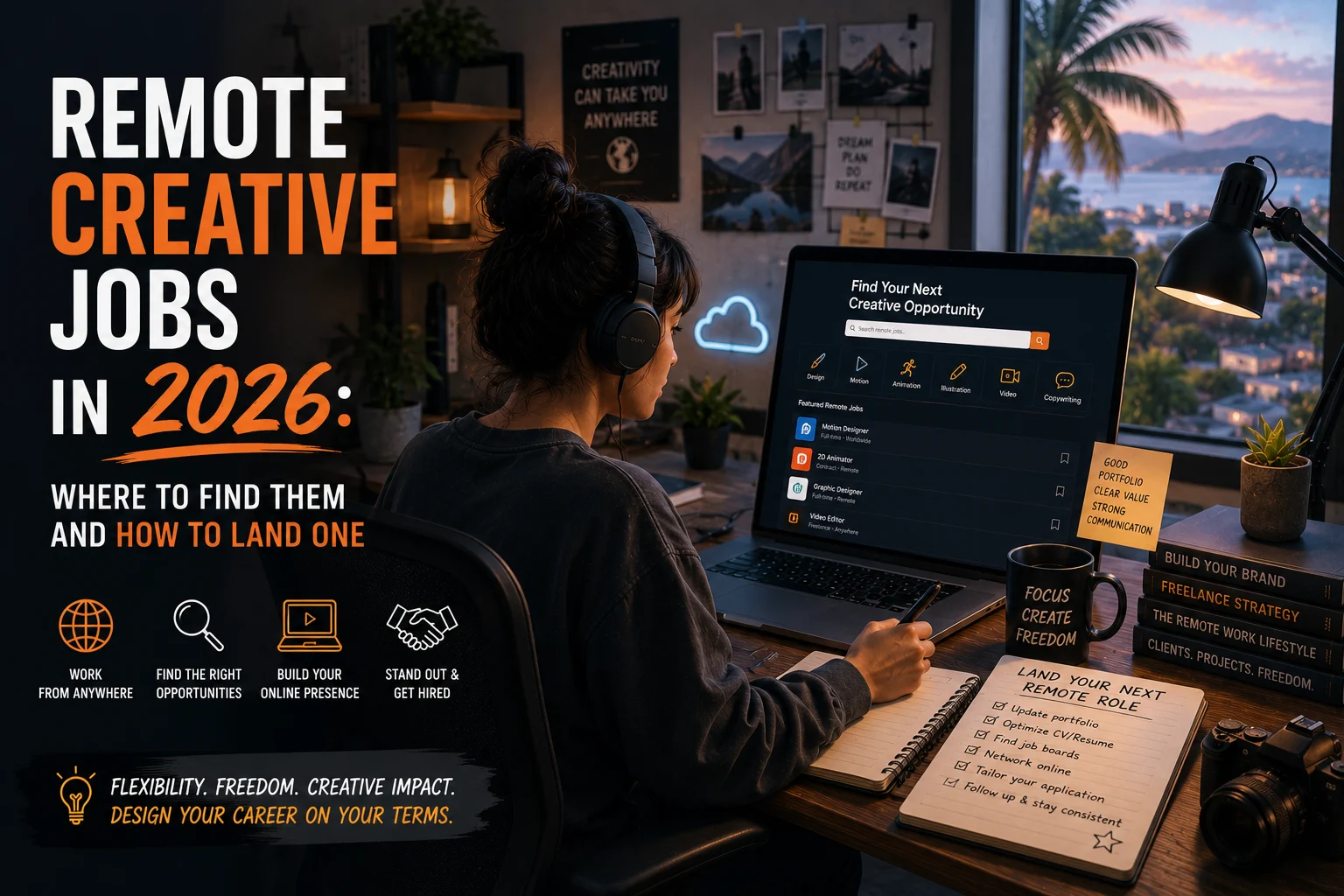
Remote work has transformed the creative industry more profoundly than almost any other sector over the past five years. In 2026, remote creative jobs are not a niche offering — they are a mainstream part of the market, with thousands of studios and agencies worldwide offering fully remote, hybrid, and remote-first positions to qualified creative professionals regardless of location. Browse remote creative jobs on PixelCareer.
Which Creative Disciplines Have the Most Remote Opportunities
Motion Design and Animation: Strong remote opportunities — much of this work is deliverable-based rather than dependent on shared physical infrastructure. Many boutique studios and agencies in this space have operated remotely for years.
VFX and Compositing: Expanded significantly since 2020. Studios have invested in cloud-based pipeline infrastructure and virtual collaboration tools that make remote work increasingly practical.
Game Design: Systems design, narrative design, and UX design are among the most remote-friendly positions — primarily documentation, prototyping, and communication-based.
UI/UX Design: One of the most consistently remote-friendly disciplines. Tools like Figma are cloud-native and built for remote collaboration.
Technical Art and Pipeline: Often have the strongest case for remote work — output is code, tools, and documentation rather than assets requiring physical review.
Where to Find Remote Creative Jobs
PixelCareer: Lists remote and hybrid creative industry jobs across animation, VFX, gaming, motion design, and UI/UX. Filter specifically for remote roles.
LinkedIn: Allows filtering by remote, hybrid, and on-site work arrangements. High-volume source of creative industry postings globally.
ArtStation Jobs: Specifically focused on game art, VFX, and animation roles with a significant proportion of remote listings.
Studio career pages directly: Many studios that hire remotely do not advertise on aggregators — checking career pages regularly is a worthwhile investment.
How to Position Yourself as a Strong Remote Candidate
Demonstrate remote work experience. Previous remote or freelance work is the strongest signal you can operate effectively outside a studio environment. Make this visible in your CV and cover letter.
Emphasise communication and self-management skills. Remote studios need people who communicate proactively, manage their own time effectively, and do not require close supervision.
Show your home setup is professional. Good lighting, clear audio, a tidy background, and stable internet are baseline requirements. Having a dedicated workspace is worth mentioning.
Be specific about your time zone and availability. For distributed teams, clarity about overlap hours removes ambiguity and demonstrates professionalism.
The Practical Realities of Remote Creative Work
Communication requires more intentional effort. Remote work replaces casual corridor communication with structured Slack messages, video calls, and asynchronous feedback tools — requiring deliberate effort to maintain collaboration quality.
Isolation can be a genuine challenge. Building a routine that includes regular contact with colleagues, participation in online creative communities, and deliberate social connection outside of work helps mitigate isolation.
Your home setup matters significantly. A dedicated workspace, quality calibrated monitor, reliable high-speed internet, and a good microphone are investments in your professional output.
Frequently Asked Questions
Are remote creative jobs paid the same as on-site roles?
It depends on the studio’s policy. Some pay a single rate regardless of location. Others adjust based on cost of living. Always clarify before accepting an offer.
Do I need a specific internet speed for remote creative work?
At least 50 Mbps download and 20 Mbps upload is a practical baseline. Ethernet rather than Wi-Fi is strongly recommended for stability.
Can junior creative professionals find remote jobs?
Remote roles for juniors exist but are less common. Many studios prefer to bring junior team members on-site initially to accelerate development through direct mentorship. Freelance remote projects are a practical approach while building toward full-time remote eligibility.
What are the best tools for remote creative collaboration?
Slack or Teams for communication, Zoom or Meet for video, Frame.io for video review, Figma for design, ShotGrid for VFX production management, and Notion or Confluence for documentation.
Is remote creative work sustainable long-term?
For many professionals, yes — when approached with intention, a quality home workspace, active professional connections, and studios with genuinely strong remote cultures.
Final Thoughts
Remote creative work is no longer a compromise — for a growing number of studios and professionals, it is simply how excellent work gets made. The key is finding studios where remote work is genuinely embedded in the culture and positioning yourself as a self-directed, communicative professional they are looking for. Browse remote creative jobs on PixelCareer.